
Our Music
Big Drum & African Rhythms
At the heart of Grenada’s traditional music is Big Drum, an Afro-Grenadian musical style that dates back to the days of enslavement. Big Drum is more than music—it’s a ritual, a celebration, and a living memory of African ancestry. Performed especially during village festivals, maroon gatherings, and special cultural events, Big Drum features energetic rhythms, call-and-response singing, and expressive dancing.
The music is played on large drums made from hollowed-out tree trunks with goatskin heads. These drums accompany songs sung in both English and African dialects, honoring the various African “nations” from which Grenadians are descended—such as the Mandingoes, Congos, or Ibos. The rhythms are pulsating and layered, designed to stir movement and memory.
Big Drum is a stronghold of Carriacou’s cultural identity, with the Carriacou Maroon and String Band Festival standing as a key event in celebrating this musical legacy.
Soca & Calypso
Like Trinidad and Tobago, Grenada is home to a powerful soca and calypso tradition that blossoms each year during Spicemas—Grenada’s world-famous Carnival celebration. Calypso in Grenada has always been a platform for witty political and social commentary, with artists using clever wordplay and humor to highlight current issues.
Soca music in Grenada has taken on its own fierce energy. Artists like Tallpree, with his hit song Jab Jab, have helped shape a Jab Soca movement—a raw, high-energy sub-genre that blends traditional Jab Jab rhythms with modern soca vibes. Jab Soca is heavily associated with J’ouvert morning, where revelers cover themselves in oil, mud, or paint and “play Jab” in a symbolic act of resistance and freedom.
Notable artists include Mr. Killa, Luni Spark and Electrify, and Boogie B, whose music has reached global audiences and brought the Jab Jab spirit into the mainstream.
Jab Jab Music
Jab Jab music is uniquely Grenadian. Rooted in the Carnival tradition, it embodies rebellion, ancestral strength, and unfiltered expression. Using rhythms from iron bands, drums, cowbells, conch shells, and whistling, Jab Jab music is both hypnotic and primal. It inspires revelers to lose themselves in the moment—dancing through the streets in the early hours of J’ouvert, smeared in black oil or paint, wearing devilish horns, chains, and whistles.
This music is less polished and more rhythmic than traditional soca. It emphasizes repetition, chant-like lyrics, and deep bass lines that call people to move. Jab Jab is a defining part of Grenada’s identity and Carnival, carrying the emotional weight of the African experience in the Caribbean.
Parang
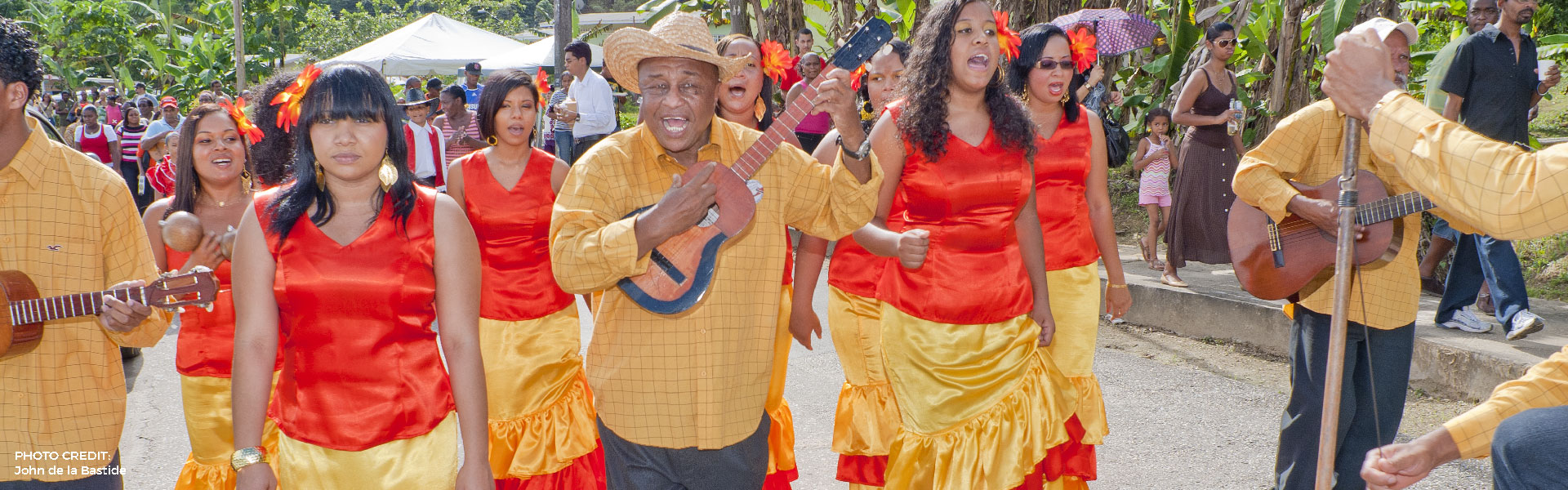
Though not as prominent as in Trinidad, Parang music has a quiet yet beloved presence in Grenada during the Christmas season. Often performed by community groups in rural areas, Grenadian parang blends Spanish lyrics and Caribbean rhythms with local flavor. Instruments like the cuatro, guitar, maracas, and mandolin are used to bring the holiday spirit to life in homes, churches, and on local radio stations.
In Grenada, parang may be performed alongside carols and folk songs, and the celebrations often include traditional dishes, storytelling, and gift-giving. In some communities, parang competitions and concerts add to the festive atmosphere.